
Federal Criminal Defense Lawyer in San Antonio and El Paso
Home > Criminal Defense > Federal Crimes
Home > Criminal Defense > Federal Crimes
If federal agents have contacted you, or you have been charged in federal court, talk to a lawyer before you talk to anyone else. West Texas Trial Lawyers defends federal criminal cases in the Western District of Texas, including the San Antonio and El Paso divisions. Calls are answered 24/7. The first consultation is free and confidential.
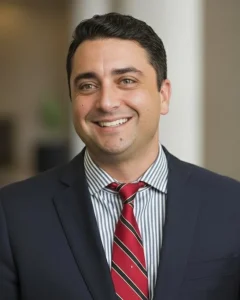
Every lawyer at our firm prosecuted cases for the State of Texas before defending them. Founding attorney Adam Setra is admitted in all four federal districts of Texas (Northern, Southern, Eastern, and Western) and in the District of New Mexico.
Where are federal criminal cases heard in El Paso and San Antonio?
El Paso Division
The El Paso Division sits at the Albert Armendariz, Sr. U.S. Courthouse, 525 Magoffin Ave., El Paso, TX 79901. Our principal office is at 1005 N Mesa St, El Paso, TX 79902. Call (915) 279-0000.
San Antonio Division
The San Antonio Division sits at the U.S. Courthouse, 262 W. Nueva St., San Antonio, TX 78207. Our San Antonio office is at 40 NE Interstate 410 Loop Suite 100 Ofc G10, San Antonio, TX 78216. Call (210) 401-1000.
How is a federal case different from a state case?
Stage
Texas state case
Federal case
Who investigates
Local police, sheriff's office, or state troopers
Federal agencies such as the FBI, DEA, Homeland Security Investigations (HSI), and U.S. Customs and Border Protection (CBP)
Who prosecutes
District attorney (34th Judicial District in El Paso; Bexar County Criminal District Attorney in San Antonio)
Federal prosecutors (U.S. Attorney's Office for the Western District of Texas)
First appearance and release
Magistrate within 48 hours; bail set (CCP art. 15.17)
Release or detention decided under 18 U.S.C. §3142
Felony charge
Indictment
Grand jury indictment
Sentencing
Statutory ranges (Penal Code §§12.21–12.35)
Statutory ranges plus the advisory U.S. Sentencing Guidelines
Parole
Possible, depending on the offense
No parole
The grand jury and the indictment
Federal felony charges come by grand jury indictment. The grand jury hears from the prosecutor and agents. The defense does not present its side there.
The detention hearing under 18 U.S.C. §3142
After a federal arrest, the court decides whether you are released before trial or held (18 U.S.C. §3142). In some drug and firearm cases, the law presumes detention. Family can help by gathering proof of work, residence, and community ties.
The U.S. Sentencing Guidelines
Federal judges must consider the U.S. Sentencing Guidelines. The Guidelines are advisory, not mandatory. They produce a recommended range based on the offense and the person’s history. How they are applied is often disputed.
Plea agreements
What federal charges are common in El Paso?
Because El Paso sits on the border, many federal cases here involve immigration, drug importation, and firearms.
- Illegal reentry after removal (8 U.S.C. §1326). The government must prove a prior removal and a later return without permission.
- Smuggling, transporting, or harboring noncitizens (8 U.S.C. §1324).
- Importing controlled substances (21 U.S.C. §§952, 960).
- Firearms offenses (18 U.S.C. §922). This includes possession by a prohibited person, such as someone with a misdemeanor domestic-violence conviction (18 U.S.C. §922(g)(9)).
Drug cases can be charged in state or federal court. Our drug crimes defense page covers Texas drug charges and penalty groups. We also defend federal fraud cases, including wire, bank, and mail fraud. See our white-collar and fraud defense page.
If you are not a U.S. citizen, a federal charge can affect your immigration status.
What should you do if you get a target letter or a federal agent calls?
What to do right now
- Do not answer questions. Be polite. Say, “I want to speak with my lawyer first.” Lying to a federal agent can be a separate crime.
- Write down the details. Agent name, agency (FBI, DEA, HSI, CBP, or other), phone number, date, and what they asked.
- Keep every paper. A target letter, subpoena, search warrant, or property receipt tells your lawyer a great deal.
- Do not delete, change, or move anything. That includes texts, emails, files, and phone data. Doing so can create a new problem.
- Do not discuss the case with anyone else or online.
- Call us. Have your full legal name, date of birth, the agency involved, and any paperwork ready. If you don’t have all of it, call anyway.
What is a target letter?
Calling about a family member arrested by federal agents?
Key facts about federal criminal defense in the Western District of Texas
Why work with former prosecutors on a federal case?
Former prosecutors know how a case is built. Every lawyer at West Texas Trial Lawyers prosecuted cases for the State of Texas before defending them. Adam Setra was a prosecutor in the 34th Judicial District Attorney’s Office, which covers El Paso, Hudspeth, and Culberson counties.
We test how agents gathered evidence and whether the facts support every element.
- Full service in Spanish: Le atendemos completamente en español.
Our number one goal is to get the case dismissed. You can read client-reported outcomes on our case results page. As reported by clients in public Google reviews. Every case is different. Past results do not guarantee future outcomes.
See how criminal cases move through Texas courts in our Texas criminal defense overview.
On This Page
Meet Our Team
Frequently asked questions about federal criminal defense
Is a federal charge more serious than a state charge?
Do I have to talk to an FBI or HSI agent who shows up at my door?
What happens at a federal detention hearing?
Are the federal Sentencing Guidelines mandatory?
What is the difference between a target letter and a subpoena?
Does your firm handle federal cases outside El Paso and San Antonio?
Can I call for a family member arrested by federal agents?
How much does a federal criminal defense lawyer cost?
Talk to a federal defense lawyer today
If an agent has contacted you, if you received a target letter, or if someone you love was arrested by federal agents, call now. Calls are answered 24/7. The first consultation is free and confidential.
You can also request a free consultation online.
"*" indicates required fields